Lateral Ankle Sprain Treatment in Nevada City & Grass Valley
Recover fully from a lateral ankle sprain. Move confidently. Prevent it from happening again.
Rolling your ankle can happen in an instant — stepping off a curb wrong, landing from a jump, or cutting during a workout. But what happens next matters more than the injury itself.
At Radius Physical + Sports Rehab, we help patients throughout Nevada City, Grass Valley, and Nevada County recover from ankle sprains the right way — restoring strength, stability, and confidence so you don’t end up dealing with repeat injuries.
If you’re searching for ankle sprain treatment near Nevada City, physical rehabilitation for ankle injuries, or wondering how long a sprained ankle takes to heal, here’s what you should know.
What Is a Lateral Ankle Sprain?
A lateral ankle sprain occurs when the foot rolls inward, overstretching or tearing the ligaments on the outside of the ankle.
The most commonly affected ligaments include:
Anterior talofibular ligament (ATFL) – most frequently injured
Calcaneofibular ligament (CFL)
Posterior talofibular ligament (PTFL)
Sprains are classified by severity:
Grade I – Mild stretch, minimal tearing
Grade II – Partial tear with swelling and some instability
Grade III – Complete tear with significant swelling and instability
Even mild sprains need proper rehab to prevent future problems.
First Things First: Do You Need Imaging?
At Radius, your evaluation begins with a thorough assessment. We use the evidence-based Ottawa Ankle Rules to determine if an X-ray is necessary to rule out a fracture.
Imaging may be recommended if there is:
Bone tenderness along the ankle bones
Inability to bear weight for four steps
Signs that suggest a fracture rather than a ligament injury
This helps ensure you get the right level of care from the start.
Why Ankle Sprains Keep Coming Back
The biggest predictor of a future ankle sprain is a previous ankle sprain.
Other risk factors include:
Limited ankle mobility
Weakness in the foot, ankle, or hips
Poor balance or coordination
Fatigue or sudden increases in activity
Without structured rehab, many people develop chronic ankle instability, leading to repeated injuries and decreased performance.
How Long Does a Sprained Ankle Take to Heal?
Recovery time varies based on severity:
Grade I: 1–3 weeks
Grade II: 3–6 weeks
Grade III: 6–12+ weeks
But here’s the key:
Pain going away does not mean the ankle is fully healed.
True recovery requires:
Restored mobility
Full strength
Balance and control
Confidence with movement
Returning too soon significantly increases the risk of re-injury.
What Actually Helps Ankle Sprains Heal
Early, Guided Movement
Current research supports early, controlled movement instead of prolonged rest or immobilization.
Early movement helps:
Improve circulation
Prevent stiffness
Restore joint mechanics
Support proper tissue healing
At Radius, we guide you through progressive loading so your ankle heals safely while regaining function.
Managing Swelling the Right Way
Ice can help with pain during the early phase:
10–15 minutes at a time
Used for comfort, not constant icing
Swelling is part of the healing process — our goal is to manage it, not eliminate it completely.
How We Treat Ankle Sprains at Radius
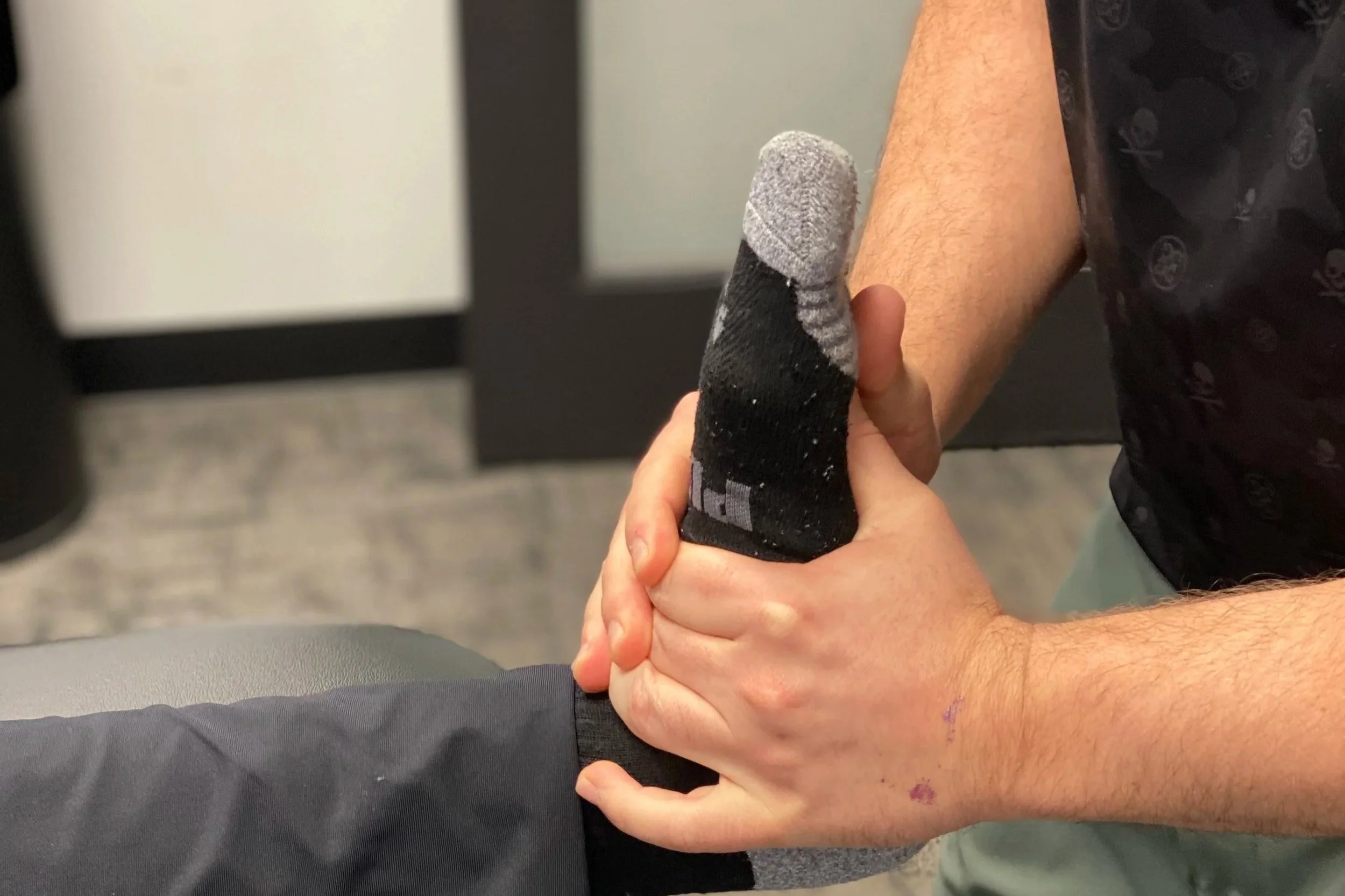
Our care combines hands-on treatment with progressive rehab tailored to your goals.
Manual Therapy
We address:
Calf and ankle tightness
Peroneal muscle irritation
Swelling and tissue restriction
This helps reduce pain and improve mobility.
Joint Mobilization
After a sprain, ankle motion — especially dorsiflexion — is often limited. Targeted joint work helps:
Restore normal ankle mechanics
Improve walking and squatting
Support return to running and sport
Progressive Rehabilitation
Recovery happens in phases:
Phase 1: Restore Motion
Ankle circles
Controlled mobility drills
Gentle range-of-motion work
Phase 2: Build Strength
Resistance band exercises
Calf strengthening
Stabilizer muscle training
Phase 3: Return to Movement
Single-leg balance
Step-down progressions
Jumping, cutting, or return-to-run training
Our goal isn’t just symptom relief — it’s getting you back to full, confident movement.
Active Rehab is commonly used for:
Rotator Cuff Injuries (see link)
Tennis Elbow Treatment (see link)
Calf Strain Rehabilitation (see link)
Morton’s Neuroma Recovery (see link)
When Should You Get Your Ankle Checked?
Consider an evaluation if:
Pain lasts more than 1–2 days
Your ankle feels unstable or “wobbly”
You want to return to sport or activity safely
You’ve had multiple ankle sprains
Early treatment often means faster recovery and fewer long-term problems.
Local Care You Can Trust
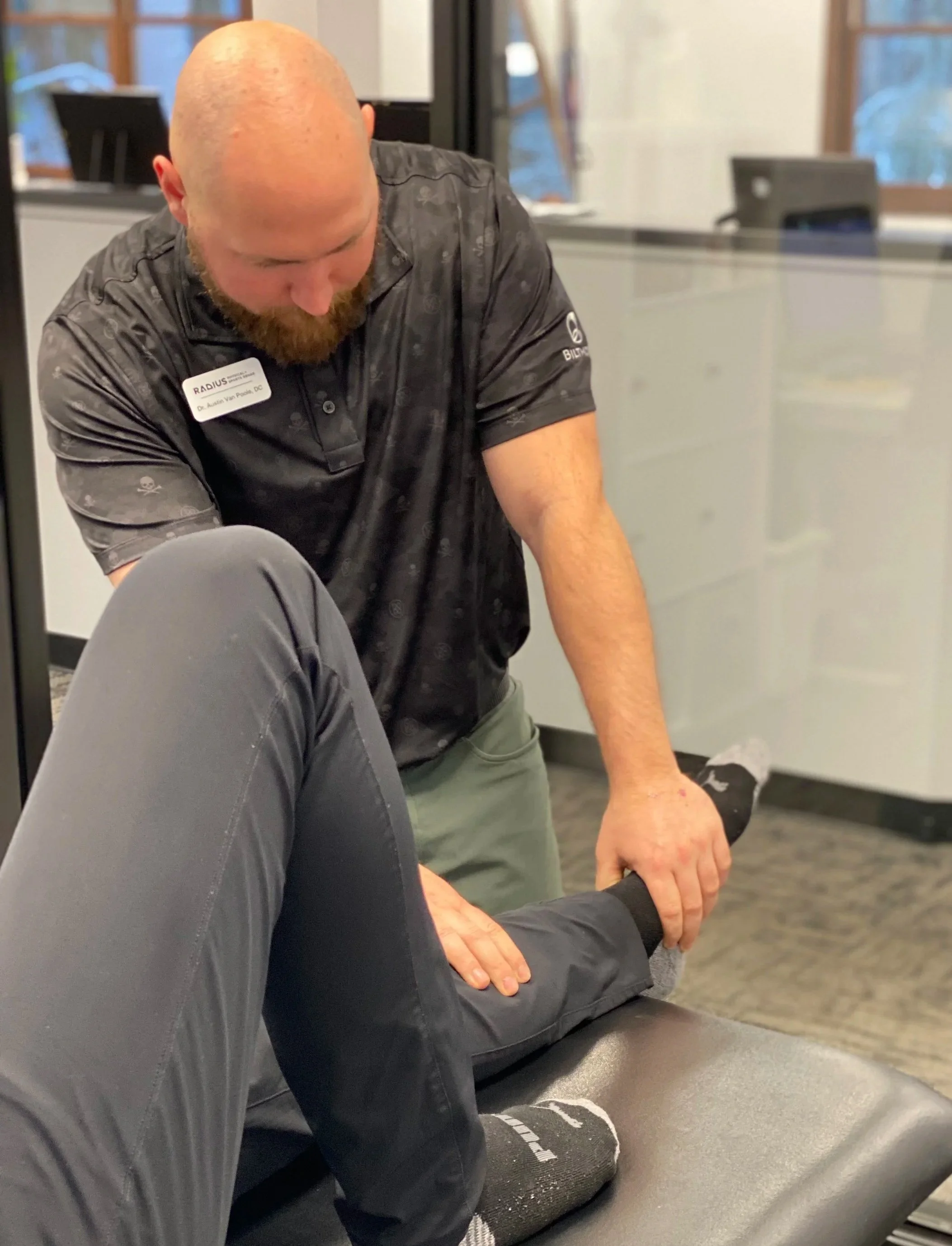
Patients across Nevada City, Grass Valley, Cedar Ridge, Penn Valley, and surrounding communities trust Radius for evidence-based sports and orthopedic rehab.
Whether you’re an athlete, weekend hiker, or just want to walk without pain, we’ll build a plan around your goals.
Don’t Just Wait It Out
Untreated ankle sprains can lead to:
Recurrent injuries
Chronic instability
Ongoing stiffness
Reduced performance
With the right care, most ankle sprains recover fully — and stay that way.
Ready to Get Your Ankle Back on Track?
If you’ve recently rolled your ankle or keep dealing with repeat sprains, we’re here to help.
What to expect at your first visit
→ see link
Check your insurance coverage
→ see link
Schedule your appointment online
→ see link
Schedule your ankle evaluation today and start a recovery plan built for long-term stability and performance.
📍 Radius Physical + Sports Rehab
Nevada City & Grass Valley
📞 (530) 955-0065
Book online anytime.