Osgood-Schlatter Disease & Jumper’s Knee Treatment in Nevada City
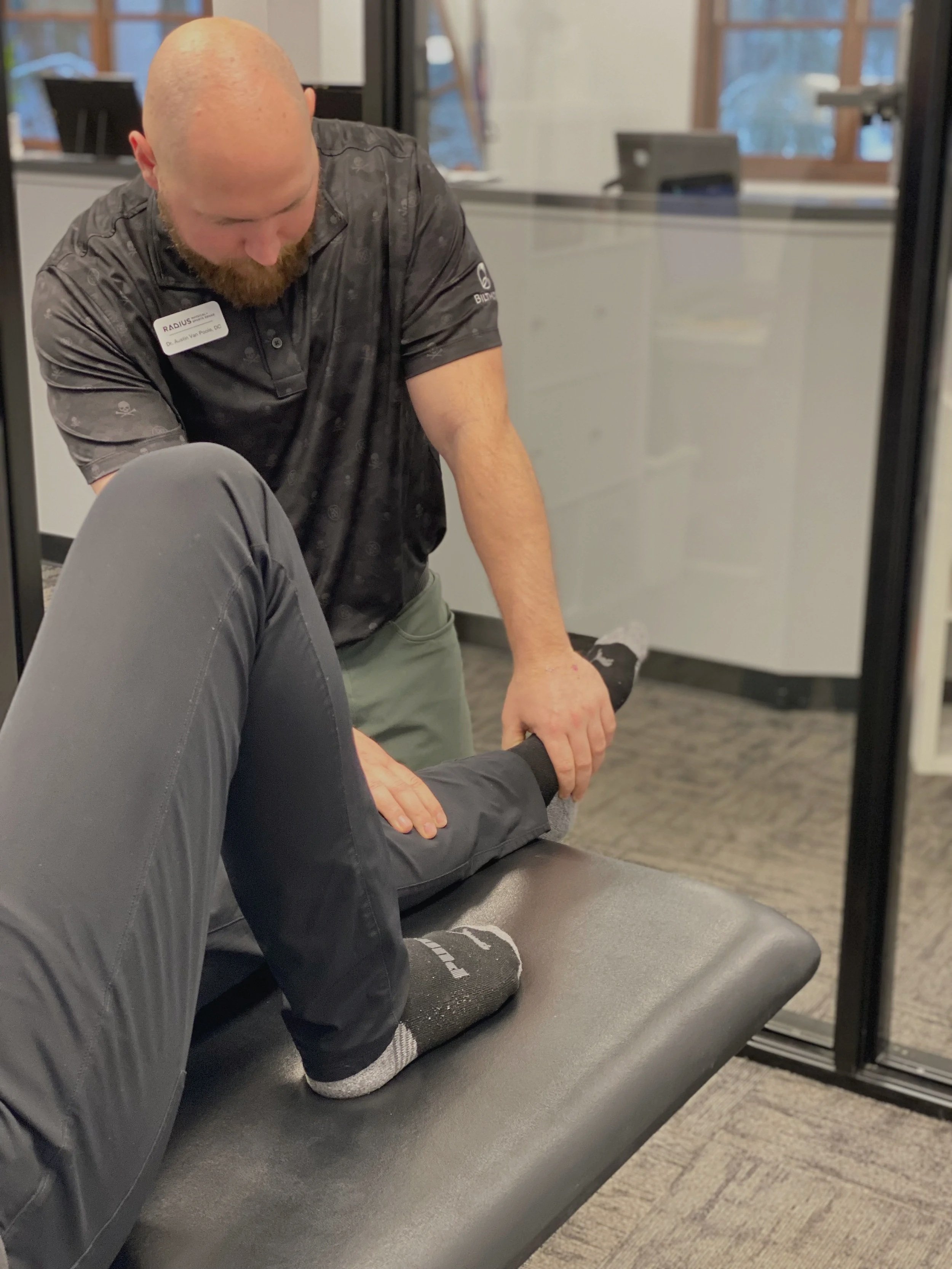
Why the Front of the Knee Hurts and How We Treat It in Nevada County
By Dr. Austin Van poole d.c
Is your child complaining of pain just below the kneecap during sports?
Or are you dealing with persistent knee pain when squatting, running, or jumping?
Front-of-knee pain is one of the most common issues we see in active families across Nevada City, Grass Valley, and Nevada County.
In younger athletes, this is often Osgood-Schlatter disease.
In teens and adults, it’s usually jumper’s knee (patellar tendinopathy).
At Radius Physical + Sports Rehab, we don’t just treat the painful knee. We identify the movement and loading problems that caused it, so you or your athlete can stay active without recurring pain.
What Is Osgood-Schlatter Disease?
Osgood-Schlatter is a growth-related condition that affects active kids and adolescents, especially during growth spurts.
It occurs at the tibial tuberosity — the bump just below the kneecap where the patellar tendon attaches.
Common symptoms
Pain just below the kneecap
Swelling or a prominent bump at the top of the shin
Pain with running, jumping, squatting, or kneeling
Tenderness to touch
The good news: it’s common, manageable, and rarely dangerous — but proper load management is key.
What Is Jumper’s Knee (Patellar Tendinopathy)?
In older athletes and active adults, similar pain usually involves the patellar tendon itself.
This occurs when:
Training volume exceeds tendon capacity
Repetitive loading causes micro-irritation
The tendon loses its ability to tolerate force
Common in:
Basketball and volleyball athletes
Soccer players
Runners
CrossFit and gym athletes
Anyone doing frequent squats, lunges, or plyometrics
Why Front-of-Knee Pain Happens
At Radius, we often describe the knee as the “middle child” of the lower body.
It takes extra stress when:
The Hip (Big Sibling) Isn’t Doing Its Job
Weak or poorly controlled glutes increase load on the knee during:
Landing
Cutting
Squatting
Running
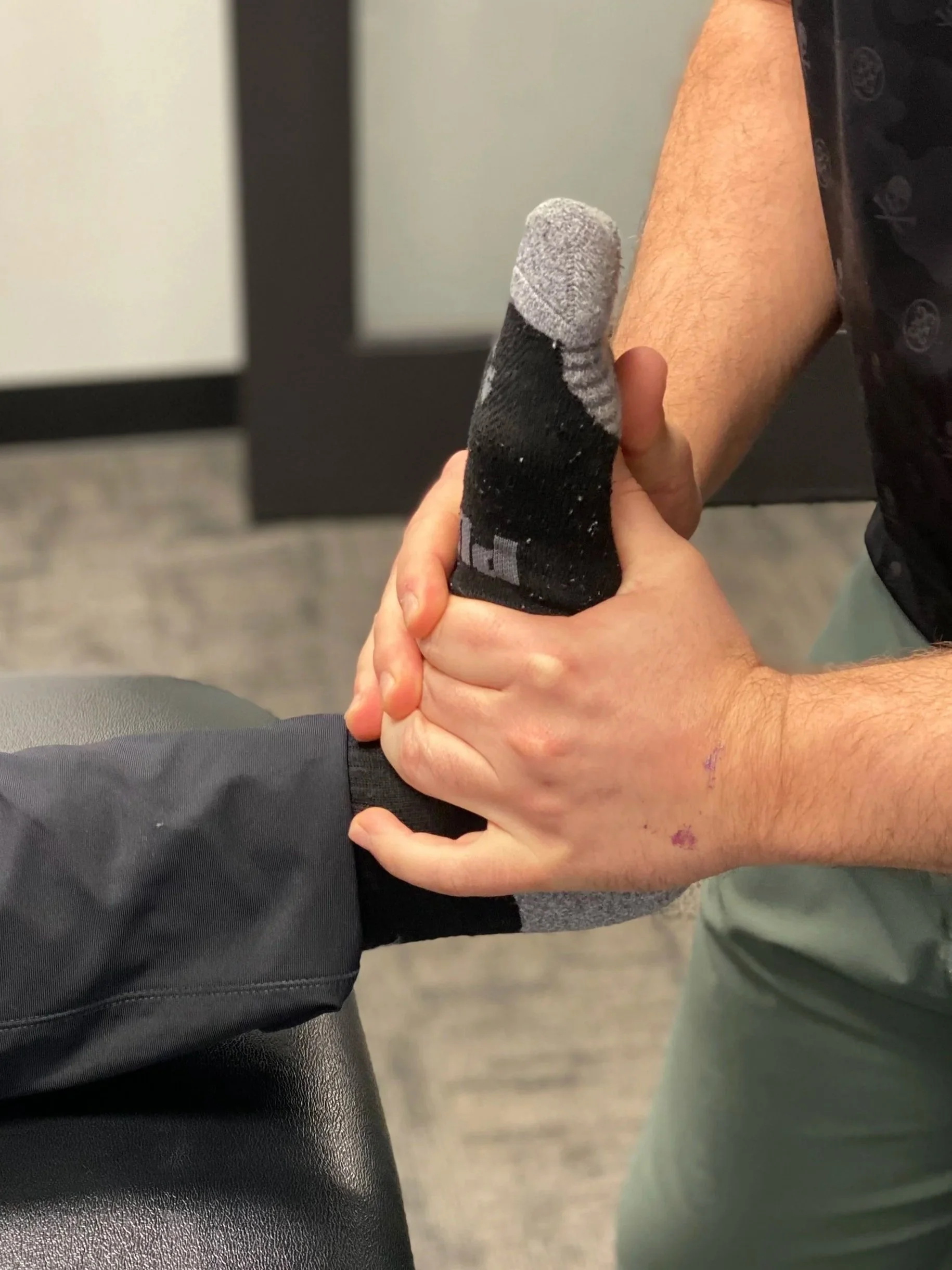
The Ankle (Little Sibling) Doesn’t Move Well
- Limited ankle mobility changes mechanics:
- Heel lifts early
- Knee collapses inward
- Quadriceps and patellar tendon absorb more stress
In most cases, the knee is the victim, not the root cause.
How Long Does Recovery Take?
Osgood-Schlatter (kids)
Symptoms may fluctuate during growth spurts
Most improve over several months
Many athletes continue modified sports safely
Patellar Tendinopathy (teens/adults)
Early stage: 4–6 weeks
Moderate: 6–12 weeks
Chronic: 3+ months
Tendons respond best to progressive loading, not complete rest.
Best Practices for Recovery
1. Modify Activity — Don’t Shut It Down
We help athletes:
Reduce jumping volume
Adjust intensity
Stay active without flaring symptoms
2. Progressive Tendon Loading
Treatment includes:
Isometric strengthening
Slow, heavy resistance training
Gradual return to plyometrics
3. Fix the Movement System
We address:
Hip strength and control
Ankle mobility
Squat and landing mechanics
How We Treat Knee Pain at Radius Physical + Sports Rehab
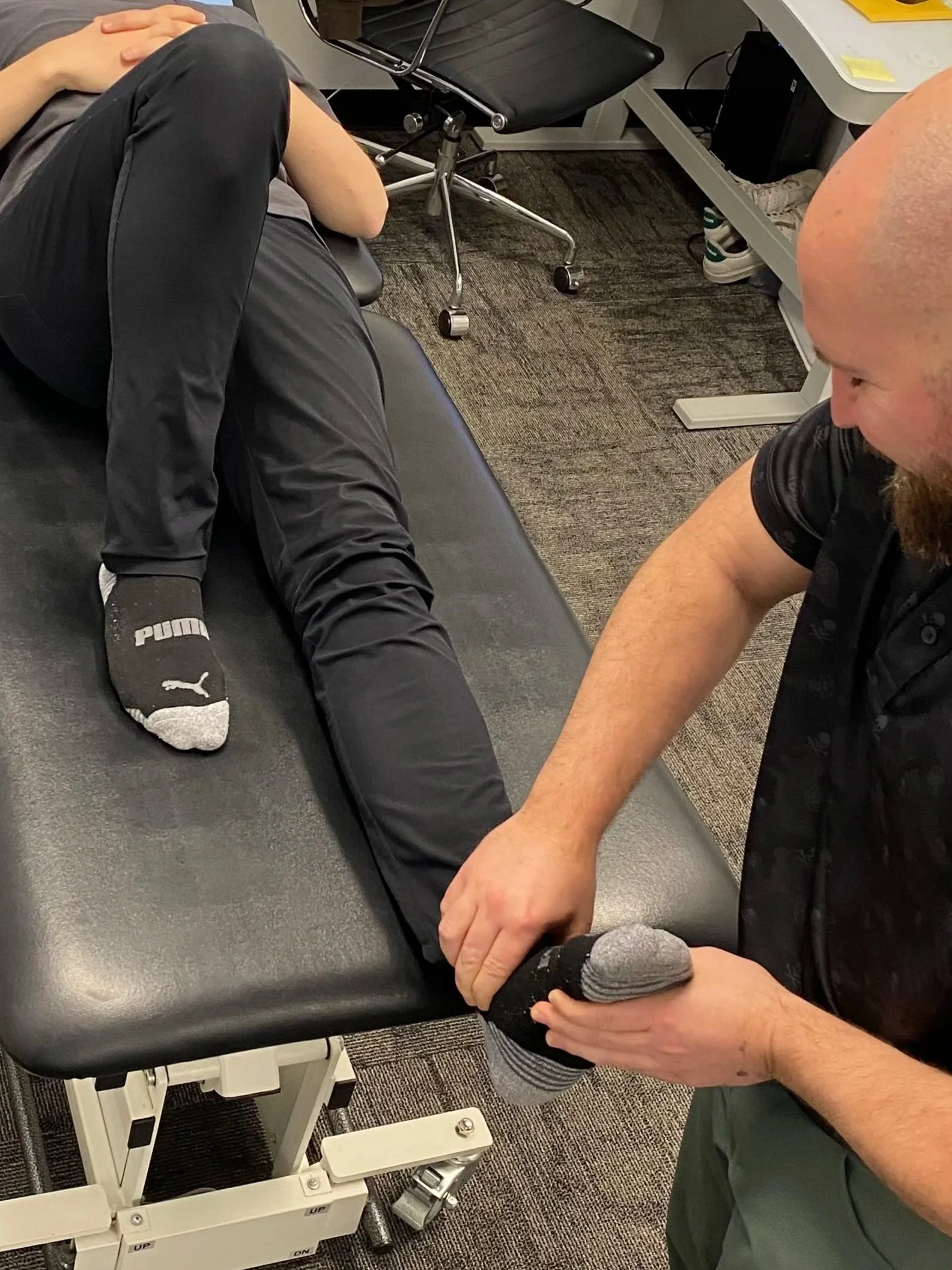
- Quadriceps and surrounding tissue work
- Patellar tendon irritation management
- Soft tissue mobility
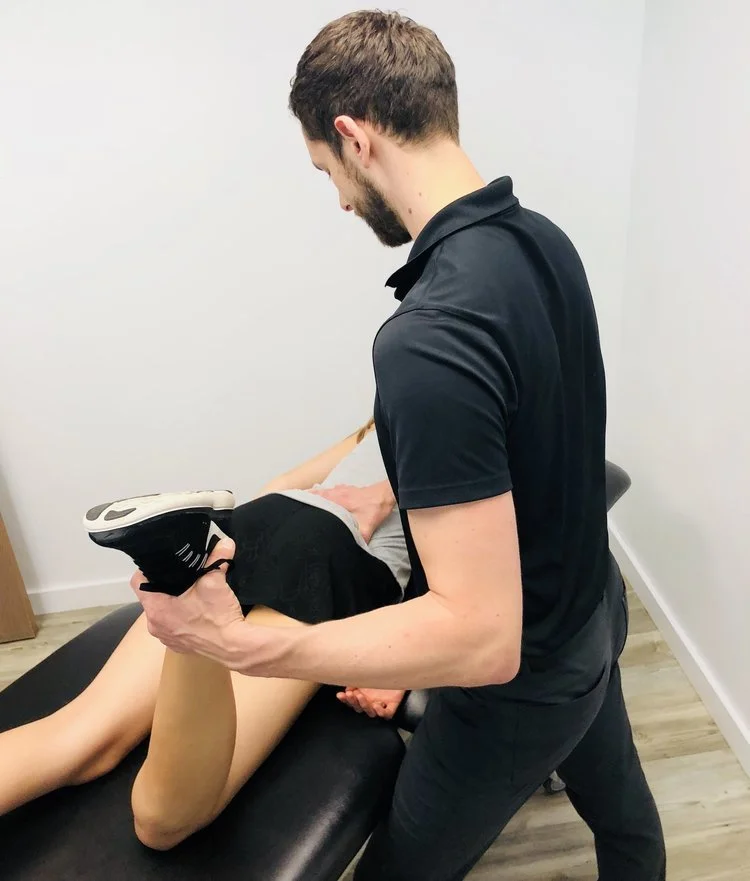
- Ankle dorsiflexion
- Hip mobility
- Knee and patellar mechanics when needed
Strength Progression
Phase 1: Isometric quad and glute activation
Phase 2: Split squats, step-downs, heavy resistance
Phase 3: Jump training and sport-specific return
Our goal isn’t just pain relief, it’s strong, confident movement under load.
When Should You Schedule an Evaluation?
Consider an evaluation if:
Your child’s knee pain lasts longer than 1–2 weeks
Pain limits sports participation
A bump develops below the kneecap
Squatting or jumping consistently hurts
You want to prevent long-term tendon problems
Early treatment helps athletes stay in their season and avoid chronic issues.
Don’t Just “Wait for Them to Grow Out of It”
Many families hear:
“They’ll grow out of it.”
Many adults think:
“It’s just tight quads.”
Ignoring persistent tendon pain can lead to:
Chronic irritation
Reduced performance
Compensations and future injuries
Longer recovery later
Knee Pain Treatment in Nevada City & Grass Valley
If you or your athlete is dealing with Osgood-Schlatter disease or jumper’s knee, our team can help.
At Radius Physical + Sports Rehab, we are experienced in youth sports injuries and tendon rehabilitation using hands-on care, movement analysis, and progressive strength training.
Schedule your knee evaluation today and get back to running, jumping, and training with confidence.
Book online to see available appointments, if you don’t see a time that works for you, Call or text: (530) 955-0065 and let our front desk work their scheduling magic!
📍 Radius Physical + Sports Rehab
Nevada City & Grass Valley
📞 (530) 955-0065
Book online anytime.